
Aquatic Vegetation Harvesting
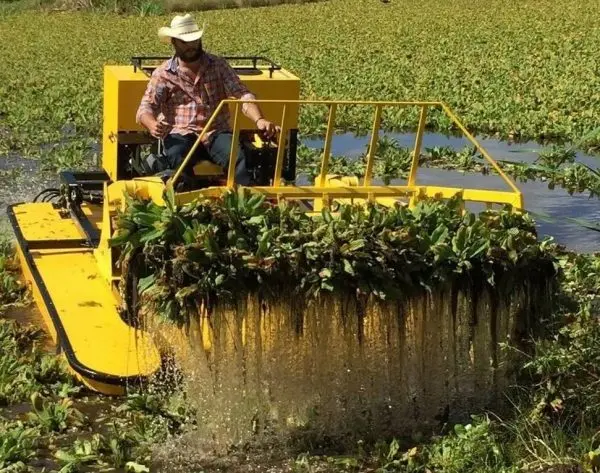
Why Aquatic Vegetation Harvesting Is Important
Invasive aquatic vegetation chokes waterways, hindering recreation, navigation, and ecosystems. Our mechanical harvesting uses advanced equipment to cut and collect plants up to 6 feet deep, transporting biomass off-site for disposal. This sustainable approach reduces nutrient loads, prevents algae blooms, and enhances biodiversity without chemicals.
We target species like duckweed that spread rapidly in spring, ensuring clear channels for boating and swimming. Serving Manchester and beyond, Legacy Waters delivers precise results with minimal environmental impact.
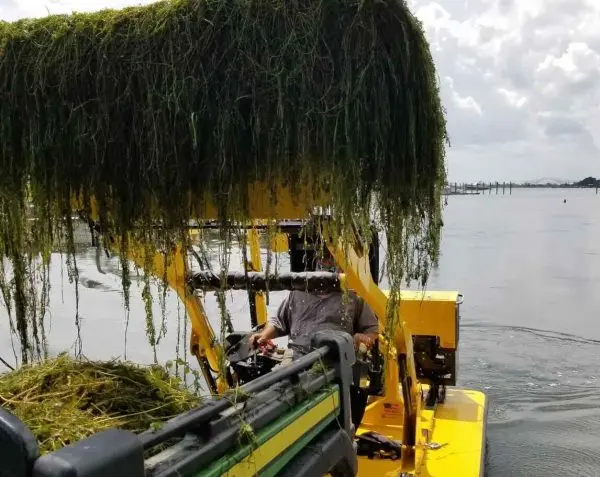
Our Proven Harvesting Process
Our process starts with a thorough site assessment to identify problem areas and map vegetation density. Hydraulic harvesters then deploy to cut, collect, and convey biomass — handling up to 18,000 lbs per load.
Post-harvest, we monitor regrowth and offer maintenance plans to keep your waterway clear season after season. Backed by years of expertise, we leave waters better than we found them, aligning with Maryland’s invasive species regulations.
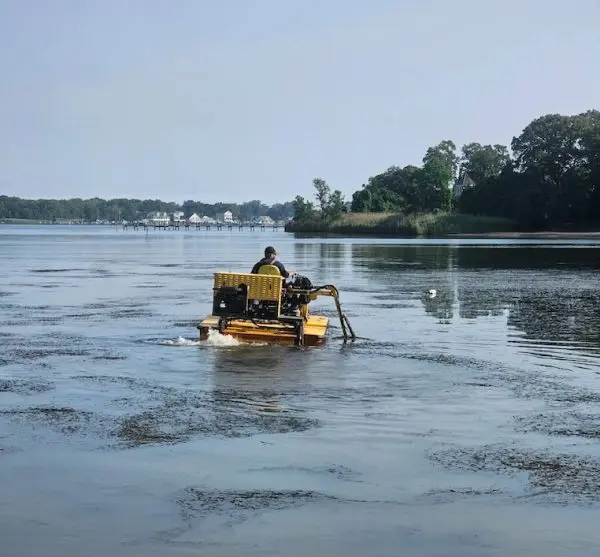
Benefits for Property Owners and Municipalities
Clear waterways mean safer swimming, better fishing, and increased property values. Our services cut through dense mats, opening swim areas and boat launches while lowering long-term maintenance costs.
Eco-conscious clients appreciate our low-impact technique over herbicides. Mechanical harvesting removes the plant material entirely rather than leaving decaying matter in the water, resulting in healthier ecosystems and lasting clarity.
Frequently Asked Questions
Aquatic vegetation harvesting is a mechanical process that cuts, collects, and removes unwanted plant growth from ponds, lakes, and waterways using specialized harvesters that operate directly on the water surface and just below it. These purpose-built machines cut submerged and floating plants, convey the biomass onto the harvester, and transport it for off-site disposal as a chemical-free way to restore open water and safe access.
Mechanical harvesting removes nuisance plants and our biomass from the water instead of killing them in place, which reduces internal nutrient recycling and the decaying matter that can fuel future algae blooms. Because it does not introduce herbicides, it avoids potential impacts to fish, wildlife, and downstream water quality, making it a preferred option for eco-conscious property owners and municipalities.
The ideal window is late spring through early summer, when invasive aquatic plants are actively growing but have not yet reached peak density or gone to seed. Scheduling harvesting during this period helps prevent seed and fragment dispersal, reduces the total biomass to be removed, and makes each harvest more efficient and cost-effective.
We target fast-spreading invasive and nuisance species such as duckweed and other dense mat-forming plants that choke channels, shorelines, and coves. Our hydraulic harvesters are engineered to cut and collect vegetation up to 6 feet deep, allowing them to manage both surface mats and submerged growth in a single pass.
By physically removing plant biomass, aquatic vegetation harvesting exports nutrients like phosphorus that would otherwise be released back into the water as plants decay, helping reduce the conditions that drive algae blooms. Clearing excessive vegetation also increases light penetration and circulation, supports more balanced aquatic habitats, and enhances biodiversity without relying on chemicals.
Aquatic vegetation harvesting is especially valuable for private lakefronts, communities, golf courses, homeowner associations, and municipalities that rely on clear water for swimming, boating, and fishing. These stakeholders see benefits such as safer recreation areas, improved aesthetics, higher property values, and lower long-term maintenance costs compared with reactive or chemical-only approaches.
Ready to Restore Your Waterway?
Contact Legacy Waters today for a free consultation.
Call (443) 927-4337